Commercial values in Perth County rarely hinge on a single shiny comparable sale. They rest on cash flow, tenant quality, and a market’s quiet rhythms. If you appraise or invest in Stratford, St. Marys, Listowel, or the towns and rural corridors that tie them together, you already know the difference between a main street storefront with loyal local tenants and a highway industrial building serving national logistics. The income approach turns those differences into numbers you can defend. Cap rates, vacancy, lease structures, and lender expectations all matter, and the way you reconcile them changes from block to block.
This article walks through how a commercial appraiser in Perth County assembles cap rate evidence, builds a credible net operating income, and chooses between direct capitalization and discounted cash flow. The aim is practical: give property owners, lenders, and advisors a framework to read an appraisal not as a black box but as a series of judgment calls rooted in real local dynamics. Along the way, I will weave in details that reflect what we actually see in this market, not a generic model transplanted from a big city.
Where Perth County Fits on the Map of Risk
Perth County sits between larger anchors. Kitchener-Waterloo and London pull commuters and logistics. Stratford’s cultural economy adds weekend footfall and seasonal demand. Agriculture and food processing create a steady base for light industrial and cold storage. This blend yields a profile that is neither urban core nor remote rural. It is a secondary market with stable tenancy for certain uses and thinner depth for others.
That profile pushes cap rates higher than GTA core assets, but it also keeps them from spiking into distressed territory. As of mid 2026, based on stabilized assets with decent covenants and reasonable lease terms, I typically see:
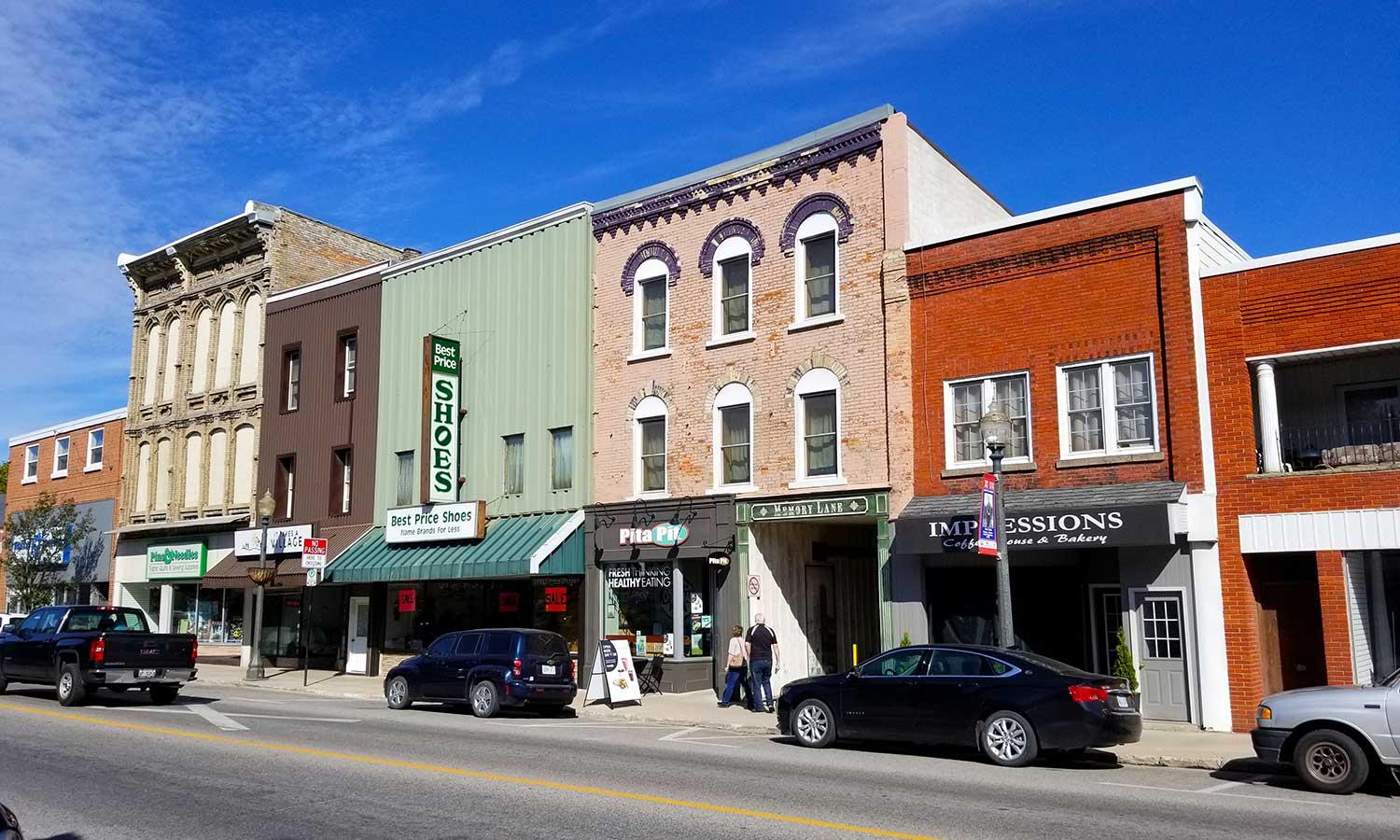
- Small to mid-size industrial in Listowel, Stratford, and rural business parks stabilizing between roughly 5.75 and 7.25 percent. Newer tilt-up with functional loading and longer remaining lease term will hug the low end; older buildings with low clear height or limited power drift higher. Main street retail in Stratford’s core with good shopfronts and tourist capture often trades between 6.25 and 7.5 percent, sometimes tighter for buildings backing onto strong restaurant or boutique clusters. Smaller towns like Mitchell or Milverton can see 7.25 to 8.5 percent, particularly where rollover risk is real. Neighbourhood retail plazas with daily needs anchors, modest CAM recoveries, and healthy parking typically sit in the 6.5 to 7.75 percent range, depending on tenant mix and lease structure. Office is the weak link post-2020. Downtown Stratford Class B office might push 8 to 9.25 percent unless tied to public or medical users with long terms.
These are not rules. They are lanes. A building with deferred capital needs, a short weighted average lease term, or environmental stigma will jump a lane fast. Conversely, a clear path to mark-to-market rents can justify a sharper cap, but only if you model the downtime and leasing costs honestly.
If you engage commercial appraisal services in Perth County, ask the appraiser to show not just the numbers, but also the mechanics behind them. A good report should demonstrate how local risk translates into the cap rate and income assumptions, with specific, recent market touchpoints.
Net Operating Income, The Part That Matters More Than Any Cap Rate
Cap rates get the spotlight, but most of the disagreements I see come from how the NOI is built. Two appraisers can agree on a 7 percent market cap and still be a few hundred thousand dollars apart on value because one normalized expenses and the other did not.
A credible NOI in this county starts with a clear view of lease structure. You will see a mix of triple net, net, and semi-gross, often in the same block. For net and triple net leases, confirm the definitions. Many older leases pass through property taxes and insurance but cap common area maintenance. I still run into “gross net” language that fixes base rent with only garbage and snow removal as pass-throughs. If you do not read the addenda and operating cost schedules, you will misestimate the recovery profile.
Vacancy and credit loss need to reflect both the building and the node. For a multi-tenant main street block in Stratford with good depth of tenants, I might carry a stabilized vacancy of 4 to 6 percent. A single-tenant industrial building with nine years left to a national covenant could sit at 1 to 2 percent, but I will model specific rollover risk in the DCF. In some small nodes, the real risk is downtime when a specialty shop leaves. Six months to twelve months is not unusual for a narrow-bay main street shell unless you invest in a new storefront and HVAC.
Operating expenses deserve line-by-line scrutiny. Snow removal can swing meaningfully across winters. Insurance has ratcheted higher since 2020, especially for older electric and mixed-use with apartments above. For a triple net building, you still need to test whether owner-paid costs exist that are not cleanly recovered, including management on recoveries or admin fees that leases cap below actuals. Always include a reserve for replacement, even if the leases try to push it to tenants. Lenders expect it, and so do sophisticated buyers. I often use a range of 0.25 to 0.50 dollars per square foot for small industrial and 0.50 to 0.75 dollars per square foot for older retail, then cross-check with upcoming roof, HVAC, and parking costs.
The last piece is market rent. In Perth County, comparable rents vary by frontage, ceiling height, loading, and parking more than many owners assume. A 2,000 square foot Stratford storefront with 22 feet of frontage rents differently than a 2,000 square foot bayside unit with a back lane. Industrial with dock access and 20 foot clear can command material premia over grade-only, 14 foot clear boxes. Look at effective rents after inducements. A deal at 15 dollars per square foot with three months free and a 15 dollar per square foot landlord work letter is not the same as a clean 14 dollars with no inducements.
Building Cap Rate Evidence That Holds Up
Cap rate extraction in Perth County takes patience. Sales are less frequent than in urban cores, and a single outlier can skew perception. I focus on three sources: verified local sales, adjusted regional sales with similar risk, and current buyer and lender pricing signals.
Local sales matter most. A Stratford main street retail trade with verifiable NOI is worth ten armchair opinions. Still, I ask whether the price included non-realty items. Restaurants often trade with kitchen equipment or licenses bundled. Strip out the value of chattels to avoid compressing the inferred cap.
When local evidence is thin, I look to secondary markets with similar tenant depth, demographics, and commuter ties. Guelph’s smaller nodes, Woodstock, St. Thomas, and some Kitchener suburban strips can inform the picture if I adjust for differences in growth expectations and rent levels. I also cross-check lender term sheets. The spread between the 5 year mortgage rate and the cap rate, along with debt coverage constraints, reveals where buyers must price to make deals financeable.
You will hear talk of the “terminal cap rate” or “exit cap” matching or exceeding the going-in rate. In a stable, modest growth market like much of Perth County, exit caps often widen 25 to 50 basis points in a five to ten year DCF, unless a property’s risk declines materially through renovation or lease-up. Anchors that improve covenant strength or lock in a long-term lease can justify a flatter exit assumption.
Direct Capitalization or DCF, Choosing the Right Lens
Appraisers in Perth County use both direct capitalization and discounted cash flow. The right tool depends on the asset, lease profile, and what decision the report is meant to support.
- Use direct capitalization when income is stabilized, leases are typical for the submarket, and near-term changes are modest relative to long-term norms. Many single-tenant industrial buildings with seven or more years left to a solid covenant, or a small retail strip with staggered terms and minimal rollover in the next two years, fit this bucket. Use DCF when lease rollover, tenant improvements, or capital programs will materially change cash flow in the first three to five years. Mixed-use with apartments above retail, properties banking on mark-to-market rent growth, and assets with a known anchor turnover date benefit from a DCF that models downtime, inducements, and re-leasing costs, then capitalizes a stabilized year.
In both cases, consistency matters. If the DCF exit cap is 7.5 percent in year five, your direct cap rate should live near that band once the NOI is stabilized and risk is equivalent. Disagreements often arise because one method bakes in leasing risk and the other ignores it. Reconciling the two means explaining those differences, not averaging them blindly.
Debt, Equity, and the Band of Investment
For many readers, the band of investment feels academic. In a thin-sales market, it becomes practical. If mortgage rates for a 5 year term sit around, say, 6.25 to 6.75 percent with typical amortization of 20 to 25 years, and lenders want a debt coverage ratio near 1.25, you can back into a borrower’s floor cap rate. Blend the cost of debt and required equity returns with realistic leverage, and you get a bracket for cap rates. In 2026, with cautious lenders, leverage might sit nearer 55 to 65 percent loan to value for small commercial assets in Perth County. Equity investors targeting 9 to 12 percent yields will not underwrite a 5 percent cap without exceptional growth or strategic upside. This framework does not set the cap rate, but it keeps you honest.
Lease Structures That Change the Math
I still encounter retail leases titled “triple net” that exclude roof and structure or cap administration fees at 3 percent. That matters. A plaza with genuine NNN leases, full recoveries, and a fair admin fee can support a tighter cap than a similar building where the landlord eats 20 to 30 thousand dollars annually in unrecoverable costs. For small-bay industrial, watch utilities. If a single meter serves multiple bays, you often see owner-paid water or gas with only rough pro rata recovery. Grossing up net rent to reflect those realities is fair, but market rent must reflect that practice too. The best appraisals trace each lease’s mechanics in a simple schedule and tie operating costs to those provisions, so the reader sees why the NOI adjusts.
Percentage rent is rare but appears in food and beverage on main streets. Model it as a probability-weighted kicker, not a guaranteed stream. If Stratford has a festival-heavy summer, average several years to smooth weather and tourism variability.
Capital Expenditures, Reserves, and the Big Ticket Items
Perth County buildings are often older. A 1960s masonry retail block with a 20 year old roof and end-of-life rooftop units has a very different risk profile than a 2015 tilt-up warehouse with LED lighting and ESFR sprinklers. Appraisers should ask for capital history and planned work. If the owner has a roof contract signed for 180,000 dollars to complete next spring, that affects either the as-is value or the hypothetical as-complete scenario. Even if no project is scheduled, a consistent reserve signals realism. Lenders in this market increasingly insist on it, particularly for mixed-use with residential components where heating, electrical, and fire systems carry cross-occupancy risk.
Zoning, Taxes, and the Local Realities that Trip People Up
Municipal tax assessments from MPAC can shift on renovation or change in use. When taxes jump, gross leases feel different overnight. If a property just moved from a lower to a higher tax class, cap rate talk is meaningless until you correct the NOI. Zoning in Stratford and the towns controls use and sometimes parking ratios; an under-parked site can limit tenant options and suppress rent. On the flip side, sites at a corner with room for a small drive-thru or pickup lane can expand the pool of quick service tenants. Environmental risk lingers on older industrial and former automotive sites. Even a clean Phase I ESA is not a value guarantee, but a red flag can widen cap rates 50 to 100 basis points until clarity arrives.
For hospitality assets that ride Stratford’s festival season, lenders and appraisers will discount peak month ADR and occupancy unless the shoulder seasons have stabilized repeat traffic. Conservative underwriting tries to reflect the average of the last three to five years, not the last hot summer.
Standards, Reporting, and What Lenders Expect
A commercial real estate appraisal in Perth County follows the Canadian Uniform Standards of Professional Appraisal Practice, and most lenders want a full narrative report, not a form. Expect a scope that includes inspection, lease review, operating statement analysis, market and cost summaries, and an income approach as the primary method. Many lenders will request a DCF for assets with near term rollover or significant tenant allowances. They also check for reliance language, extraordinary assumptions, and limiting conditions. If your commercial appraiser in Perth County is preparing a report for financing, clarify who the client is and who can rely on the report. Banks will kick back an appraisal that names the borrower as client rather than the lender, even if the analysis is sound.
A Grounded Example
A few years ago I appraised a three unit retail building on Stratford’s main corridor. Two tenants were local, one a café on a gross lease with a clause that excluded property tax increases above a base year. The third was a national wireless store on a true net lease with seven years remaining and two five year options. The building had a roof at year 18 of a 20 year warranty and HVAC units nearing end of life.
The owner handed me a tidy one page statement with a healthy NOI. On inspection, snow removal costs were understated compared to invoices across two harsh winters. The café’s recovery structure meant 9,000 dollars of rising taxes sat with the landlord. I rebuilt the NOI to reflect actual averages and added a 0.60 dollars per square foot reserve because of the HVAC and roof timing. Effective NOI dropped about 11 percent from the owner’s figure.
On cap rate, local sales showed 6.5 to 7.25 percent for well-located main street assets with national covenants. But this subject had one semi-gross lease with an unfavorable tax clause and upcoming capital. After bracketing with regional references and a lender’s indicative term sheet, I reconciled at 7.4 percent for direct capitalization. I also ran a five year DCF with a 7.75 percent exit cap and explicit HVAC replacement in year two. The two methods converged within 2 percent. The lender funded, and the owner used the report to renegotiate the café’s lease on renewal. Two years later, the reserve proved prescient when a compressor failed in August.
Preparing for a Commercial Property Appraisal in Perth County
If you want a smoother process and a tighter value range, assemble a package that anticipates the underwriter’s questions. The essentials are short, and each pays off in fewer assumptions and fewer email volleys.
- Current rent roll, all executed leases and amendments, and a schedule of options, step-ups, and recoveries The last three years of operating statements with detail on utilities, insurance, snow, landscaping, repairs, and management fees Capital expenditure history for the last five years, plus any quotes or contracts for planned work Recent property tax bills and any assessment appeal correspondence A site plan, floor areas by unit and measurement method, and photos of mechanical systems and roof
A commercial appraisal Perth County lenders can rely on depends heavily on this documentation. When information is missing, appraisers reach for market proxies. Proxies widen ranges, which turns into conservative values.
Common Pitfalls that Inflate or Depress Value
I see a handful of recurring errors. Owners sometimes treat unusual good years as the norm. A bumper tourist season or a rent holiday from a forgiving landlord on a neighboring comp can create illusions of permanence. On the other side, some cut reserves to zero because a lease says the tenant handles everything. Even perfect NNN tenants move on, and replacement costs rarely align cleanly with pass-throughs.
Another trap is ignoring rollover cliffs. A plaza with a 55 percent rent roll from two tenants expiring in the same year deserves a higher cap or an explicit DCF that prices downtime and incentives. Lenders read lease expiry schedules closely, and appraisers should too. Then there is https://ricardouhvu264.timeforchangecounselling.com/perth-county-commercial-land-appraisers-valuing-development-potential parking. Retail without practical parking in small towns suffers unless the foot traffic is exceptional. Market rent must mirror that reality.
Industrial obsolescence sneaks up. A building that worked for light manufacturing in 1985 may struggle today without three phase power, more loading, and modern clear heights. Replacement cost and land value can cap the upside if the building cannot command new-era rent levels. Mixed-use adds another layer, because residential code upgrades can trigger unexpected costs when you pull permits, from sprinklers to accessibility.
When a Higher Cap Rate is the Right Answer
Clients sometimes bristle at a cap rate that looks 50 basis points higher than a neighboring sale. The better question is, what risks does the extra half point compensate? Short remaining term to a private covenant? Non-recoverable costs? Known capital spend in the hold period? Limited tenant demand for a deep, irregular main street bay? Once those elements are explicit, the conversation becomes productive. In many Perth County assets, shaving a little from NOI through honest reserves and then capitalizing at a slightly sharper rate yields the same value as inflating NOI and capitalizing at a softer rate. The key is internal coherence. Lenders and auditors check that first.
How Commercial Appraisers Anchor Local Judgement
A seasoned commercial appraiser in Perth County has a mental map of streets and nodes. That map includes which corners reload quickly, which side streets are resistant to change, and which industrial parks are magnets for expansion. That judgment shows up in small choices: whether to carry a 5 percent or 7 percent vacancy, whether to model twelve months of downtime, whether to assume TI at 10 dollars or 25 dollars per square foot for a new tenant, and whether administration fees are actually collectible given lease caps. It also shows up in valuation method. A quick direct cap can be perfectly sound for a stabilized small-bay industrial property. A careful DCF, with explicit leasing costs and reversion, is indispensable for a mixed-use block banking on tenant rotation and rent growth.
For owners and lenders searching for commercial appraisal services Perth County wide, look for reports that do more than show math. They should tell a short, specific story about where the subject sits in its lane of risk, and how that lane translates to cash flow and cap rate.
Final Thoughts on Value in a Practical Market
Commercial property appraisal in Perth County rewards clarity. Clarity about what the leases actually say, not what the cover page claims. Clarity about which expenses truly recur, not what a one year snapshot happens to show. Clarity about the risk reflected in cap rates, not the rosiest sale in the region. When cash flow is presented cleanly, cap rates drawn from relevant evidence, and the chosen income approach matches the property’s profile, values tend to land inside a narrow, defensible band.
The county’s strengths are steady. A diversified base of light industrial, logistics linked to regional highways, main streets with character, and a cultural engine in Stratford that keeps storefronts interesting. Its limits are also steady. Thin buyer pools for specialized assets, longer leasing downtime for irregular spaces, and older building stock that requires real capital. Commercial real estate appraisal Perth County practitioners live in that tension. They turn it into grounded numbers that borrowers can take to lenders and owners can use to make decisions. The best of them do it with transparent assumptions and a feel for how these towns really work.